บ้าน / ข่าว / ข่าวอุตสาหกรรม / วิศวกรรมแห่งความยืดหยุ่น: ปริมาณสแปนเด็กซ์และการคืนสภาพในผ้าโพลีเอสเตอร์ยืด 4 ทิศทาง
ข่าวอุตสาหกรรม

The ** 4 way stretch polyester fabric ** is foundational to modern activewear, offering unrestricted movement necessary for high-intensity activities. This performance is achieved by incorporating elastomeric fibers, primarily spandex (elastane), into the polyester base. For technical buyers and product developers, the most critical decision is determining the correct spandex percentage, as it represents a fine balance: achieving the required maximum stretch while maintaining superior elastic recovery power and long-term dimensional stability.
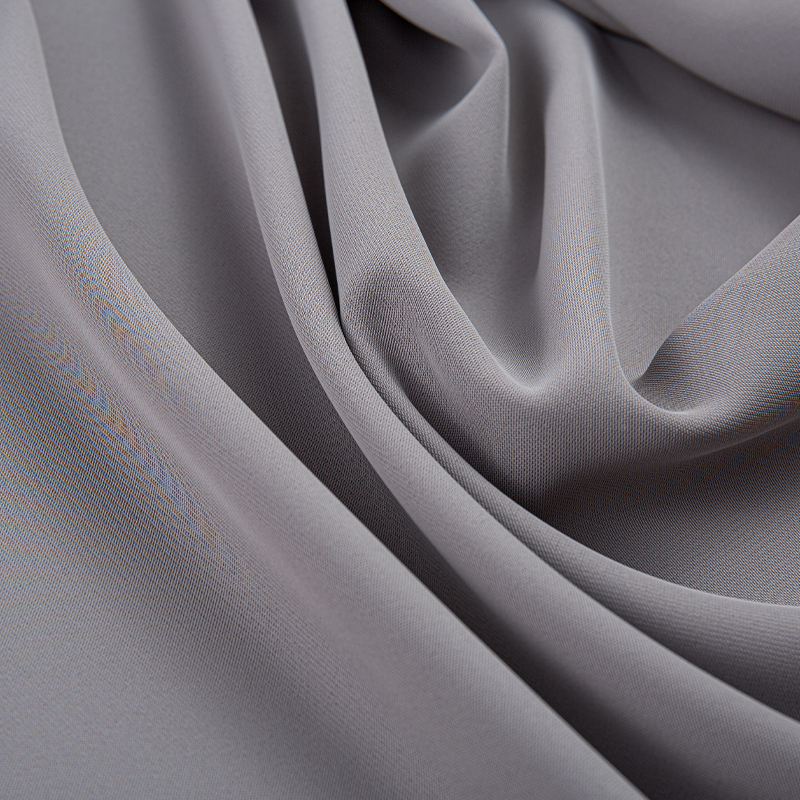
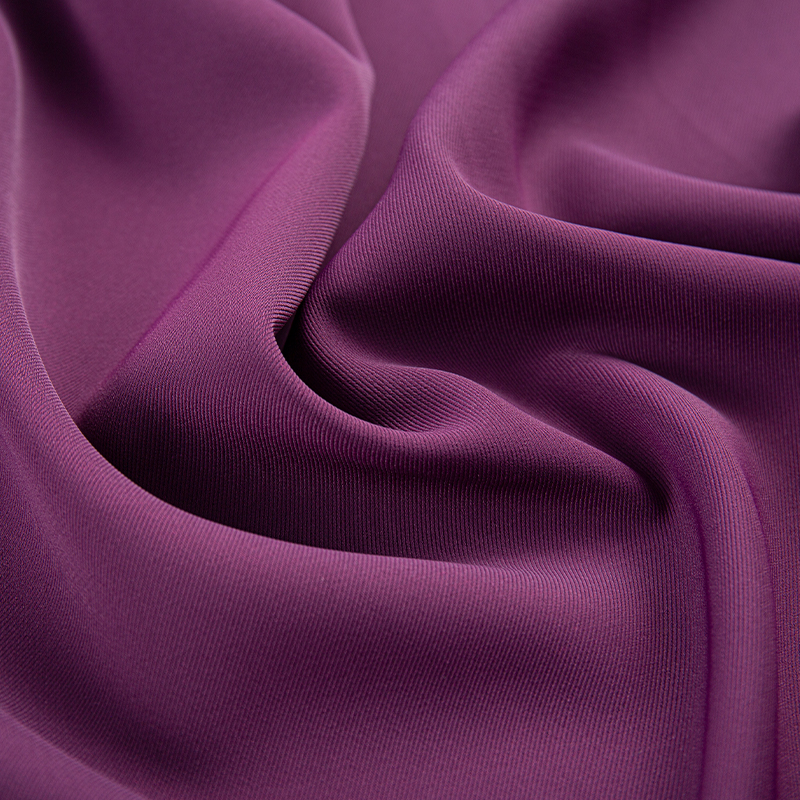
260gms grey matte texture breathable four way stretch spandex fabric for sportswear, casual fashion
A successful stretch fabric must do more than simply stretch; it must return to its original shape quickly and consistently.
Recovery power is arguably more important than maximum elongation. It is measured as the force required to stretch the fabric and the residual stretch remaining after the force is released. High spandex blends must demonstrate superior Stretch recovery power of high spandex polyester blends (ideally $>95\%$) to prevent "bagging" or permanent deformation, particularly at the knees and elbows.
| Spandex Content (Approx.) | Maximum Elongation (Warp/Weft) | Elastic Recovery (After 30 min. relaxation) |
|---|---|---|
| Low (5% - 8%) | Good (Up to 40%) | Excellent (>98%) |
| High (15% - 20%) | Superior (Up to 70%) | Very Good (95% - 98%) |
Standardized testing provides the objective data required for performance claims.
Reliable sourcing depends on verifiable test methods. The **ASTM D3107 testing for stretch fabric elongation and recovery** method is the industry gold standard. This test measures the elongation and the immediate and delayed recovery from a set extension, providing crucial metrics to assess the long-term viability and performance integrity of the **4 way stretch polyester fabric**.
Poor dimensional stability leads to shrinkage, growth, and spirality after washing, diminishing the garment's fit and function.
Spandex fibers are particularly sensitive to heat setting temperature. If the temperature is too low, the stretch will be inconsistent; if too high, the elastomeric property of the fiber can be damaged, leading to a permanent loss of stretch and poor **Stretch recovery power of high spandex polyester blends**.
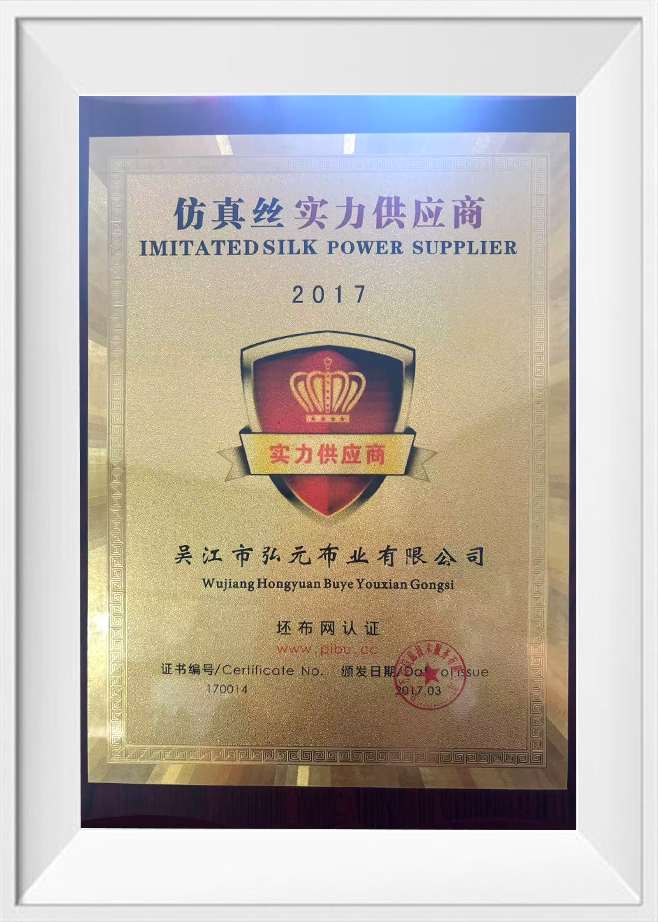
WuJiang City Hongyuan Textile Co., Ltd., deeply rooted in the textile industry for over 30 years in Shengze, the "Silk Capital," operates a 60,000 square meter standardized production facility equipped with 500 water jet looms and comprehensive front-end supporting equipment, including double twisting and advanced warp drawing machinery. Our extensive experience and technical resources allow us to precisely engineer functional fabrics. We specialize in developing high-performance **4 way stretch polyester fabric**, meticulously controlling spandex integration to achieve the Optimal spandex content for 4 way stretch polyester fabric while mastering the complex heat-setting processes essential for Achieving dimensional stability in 4 way stretch fabric . We utilize rigorous testing methods, including protocols similar to the ASTM D3107 testing for stretch fabric elongation and recovery , to ensure every batch meets the highest technical standards for maximum stretch and recovery power required by global brands.
A content below the optimal range will result in low maximum elongation, meaning the fabric will restrict the wearer's movement and provide insufficient freedom for the intended athletic application.
Recovery power is more critical because it dictates whether the garment returns to its original shape after use. Poor recovery leads to "bagging," distortion, and a loss of the garment's intended fit and compression properties.
ASTM D3107 is a standardized method used to quantify the fabric's performance by measuring the percentage it stretches under load and the percentage of that stretch it recovers after the load is removed and a period of relaxation has passed.
Heat setting applies controlled heat and tension to permanently stabilize the molecular structure of the spandex and polyester fibers, minimizing the fabric's tendency to shrink or grow during subsequent washing and wear cycles.
For high-performance activewear, a good percentage is typically between $40\%$ and $70\%$ in both the warp and weft directions, providing the necessary range of motion without excessive effort.

Phone: +86 18806251599
TEL: +86 0512 63062555

Email: [email protected]

Address: เลขที่ 1788 ถนน Yuanqu เมือง Shengze เขต Wujiang เมืองซูโจวมณฑลเจียงซูประเทศจีน